What to wear
A South Indian wedding is silk, jasmine, and a lot of colour. If that is new to you, treat this as a set of ideas. Wear what you can sit in, dance in, and walk in. Mix pieces, or bring something of your own.
Sangeet
Festive Indian wear
Music and dancing — colourful and comfortable enough to move!
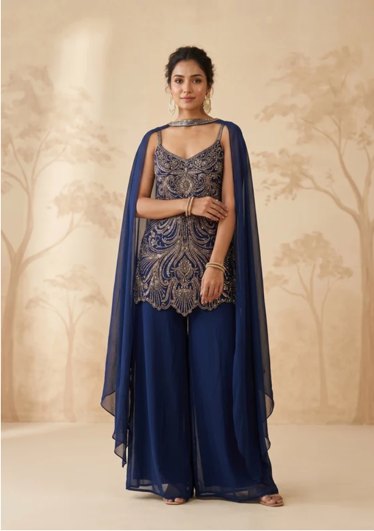
For her
- A lehenga is a flared skirt, a fitted blouse, and a dupatta. An anarkali is a floor-length suit. A silk saree or a half-saree, a South Indian favourite, works too.
- Bright colours, a little sparkle, or a gold zari border.
- Shoes you can dance in.
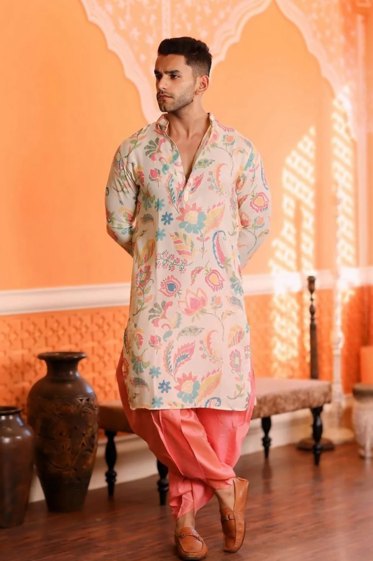
For him
- A silk or cotton kurta, a kurta with a Nehru jacket, or a festive shirt with a veshti (a dhoti).
- Rich or pastel colours, with light embroidery or a print.
- Loafers or juttis, the Indian slip-ons, if you want them. Anything you can dance in.
The wedding, and the days beside it
Traditional Indian wear
The ceremony is at Vanadurga Temple on the morning of 14 December. Silk, a gold border, and a bright colour are the usual picture. The lunch and cultural programme on the 15th, and the pooja in Neelkod on the 17th, take the same dress. A modest festive outfit in a colour you like is enough.
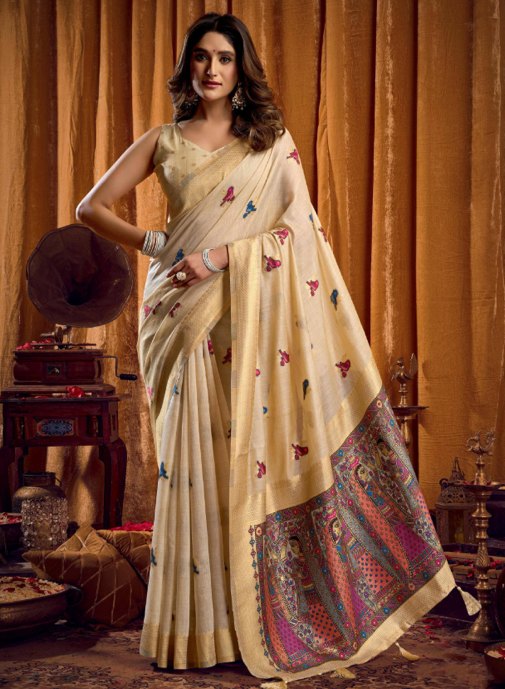
For her
- Kanjeevaram and Mysore silk are the classics. A half-saree, a silk salwar suit, or a lehenga is just as welcome if you would rather not drape a saree.
- Red, maroon, green, yellow, orange, and peacock blue, often with a gold border. Plain white and all-black are usually kept away from the wedding and the pooja.
- You enter the temple barefoot, and you may sit on the floor for a while. Slip-on shoes, and an outfit you can sit in.
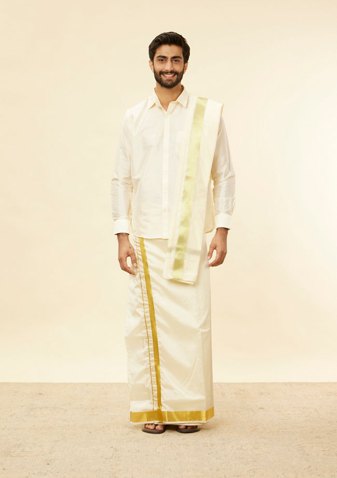
For him
- A veshti (called a panche in Kannada) with a silk shirt or kurta, and an angavastram, the shoulder cloth. A kurta-pyjama, or a sherwani if you want to dress up.
- Cream and gold are classic with a veshti. Maroon, green, and mustard work too.
- Traditional dress is optional. Wear what you are happy to sit in.
Beach party
Indian wear, comfortable for the sand
Comfort first. Indian clothes are welcome. So is anything light, breezy, and easy on the sand.
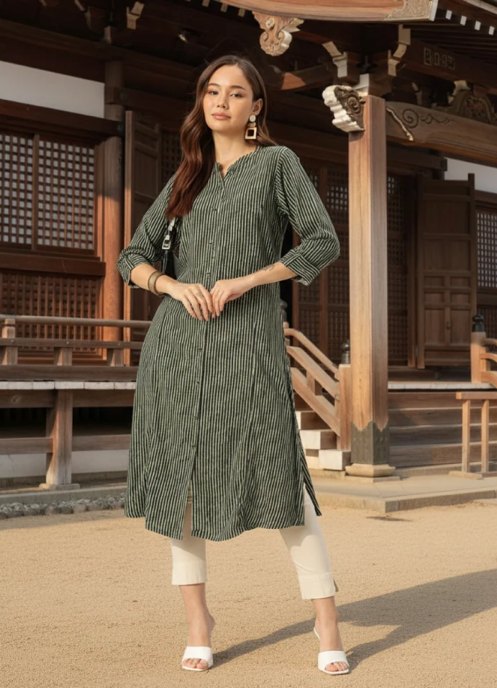
For her
- A cotton or georgette kurta with palazzo pants or a full skirt, a cotton saree, or an ankle-length kurti.
- Cotton, linen, chiffon, and georgette. Ankle length stays out of the sand.
- Flat sandals, or go barefoot.
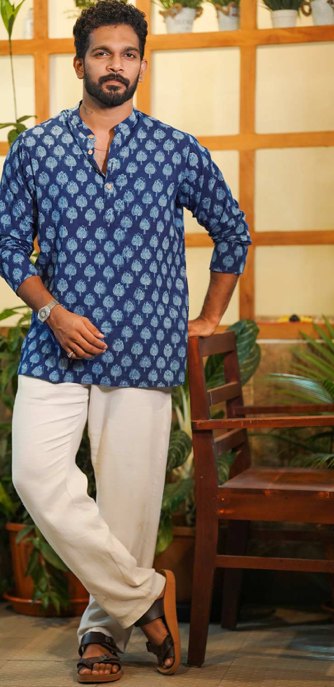
For him
- A short-sleeve cotton or linen kurta, or a casual shirt with a veshti.
- Light cloth, in a bright or pastel colour.
- Sandals, flip-flops, or barefoot.
Reception
Cocktail attire
An evening at Rajathadri Palace in Bengaluru. Dress as you would for a party at home. Indian and Indo-western clothes are just as right, if you want to keep them on for one more night.
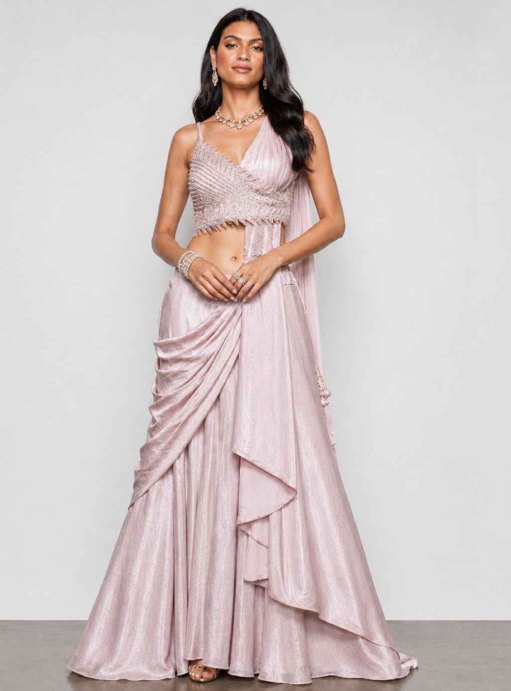
For her
- A cocktail dress or gown, an elegant saree, or an Indo-western outfit.
- Jewel tones, metallics, pastels, or black.
- Heels, flats, or dressy sandals.

For him
- A suit, a blazer and trousers, or an Indo-western jacket with a kurta. A tie is optional.
- Navy, charcoal, black, or a deep jewel tone.
- Dress shoes, or a smart loafer.
Warm days, cooler evenings
December on the coast is typically about 19–30°C (66–86°F): warm afternoons, a breeze off the sea, cooler nights. Cotton, linen, chiffon, and georgette are kinder than heavy silk or velvet, especially in the daytime. Bengaluru is cooler in the evening, about 16–27°C (61–81°F), so bring a layer if you are staying for the reception.
How to drape a saree
If you have never worn a saree, the Nivi drape is the usual place to start. It is entirely optional. Pre-stitched sarees are easy to find, and much quicker to put on. The steps below are the idea. The links show it.
The Nivi drape
- Tuck the plain end into the petticoat at your right hip, and wrap the fabric once around your waist. Keep the hem just grazing the floor.
- Gather the rest into five to seven even pleats, and tuck them in just left of your navel so they fall in a straight line.
- Bring the pallu, the decorative end, up and over your left shoulder so it falls down your back.
- Pin the pallu to your blouse at the shoulder, and pin the pleats at the waist. A couple of safety pins matter more than they sound.
Most sellers include a matching petticoat and a blouse, or will stitch the blouse to your measurements. Ask for that when you order, so it is ready when it arrives.
- Nivi drape, for beginners Tia Bhuva, on YouTube
- A written Nivi guide, with photos Lashkaraa
- The Nivi drape, step by step Kalki Fashion
Where to shop
These shops ship outside India. The first three are known for South Indian silks. The last two carry a wider range of festive clothes. Confirm shipping to your country at checkout.
Shops
- Nalli Silks Kanchipuram and other silk sarees, and men’s kurtas and dhotis.
- Pothys Silk and cotton sarees, half-sarees, and men’s dhotis, shirts, and kurtas.
- RMKV Mysore silk, Kanchipuram, cotton sarees, and men’s ethnic wear. Customs duty may apply.
- Utsav Fashion Sarees, lehengas, kurta sets, and menswear, with express delivery to many countries.
- Kalki Fashion Festive and traditional clothes for women and men.
Before you order
- Size charts differ by brand. Measure, rather than trusting your usual size.
- Order three or four weeks ahead, so there is time to stitch a blouse and to ship.
- International orders can pick up customs or import duty.
- If a colour or a cloth is unclear, most of these shops answer on chat or WhatsApp.